
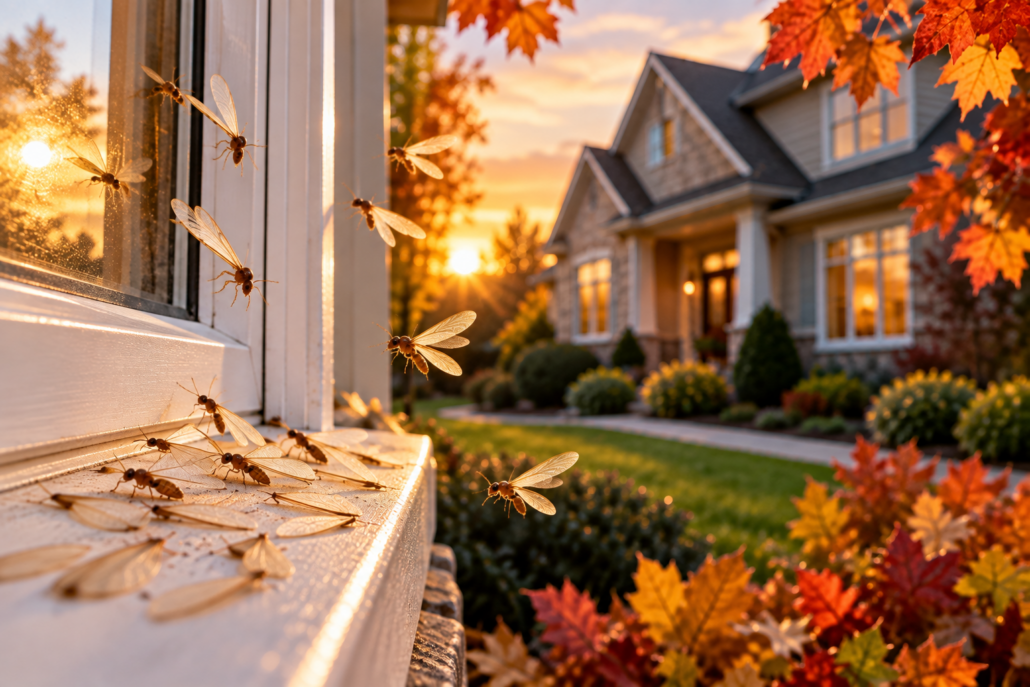
Fall Termite Swarms: What to Know
When most homeowners think about termites, spring usually comes to mind. Warmer temperatures and rainy weather are well known for bringing termite swarmers out in large numbers.
But seeing flying termites in the fall isn’t something you should automatically dismiss.
Depending on the termite species and local weather conditions, swarming activity can occur later in the year. And while a few flying insects around your home may not seem like a major concern, termite swarmers can be an important warning sign that a mature colony is nearby.
The key is knowing what you’re looking at and what to do next.
What Exactly Is a Termite Swarm?
A termite swarm is part of the colony’s natural reproductive cycle.
Once a termite colony becomes mature, it can produce winged reproductive termites known as alates, or swarmers. These termites leave their existing colony, pair up, shed their wings, and attempt to establish new colonies.
Swarming usually doesn’t last very long. In fact, you could miss the actual swarm entirely.
What homeowners often discover instead are the clues left behind: small piles of discarded wings near windows, doors, light fixtures, or other areas of the home.
That’s why those little wings shouldn’t simply be vacuumed up and forgotten.
They may be telling you something.
Wait, Don’t Termites Only Swarm in the Spring?
Spring is a major swarming period for several common termite species, particularly subterranean termites. However, not every termite species follows the same schedule.
Some termites may swarm later in the summer or into the fall, depending on species and environmental conditions.
Weather can play a role, too.
Warm temperatures, moisture, and changes in weather conditions can create favorable circumstances for reproductive termites to take flight. That means an unusually warm fall can sometimes keep insect activity going longer than homeowners expect.
The important takeaway?
Don’t assume termites can’t be active simply because summer is over.
Termites or Flying Ants?
This is where things can get confusing.
Flying ants and termite swarmers can look surprisingly similar from a distance, and both may suddenly appear around a home.
There are a few characteristics that can help tell them apart.
Termite swarmers typically have a relatively straight body without a dramatically pinched waist. Their antennae are generally straight, and their four wings are roughly equal in length.
Flying ants typically have a more defined, narrow waist, bent or elbowed antennae, and front wings that are noticeably larger than their back wings.
Of course, you probably don’t want to spend your evening examining insects with a magnifying glass.
If you’re unsure what you’re seeing, that’s a good reason to have a pest professional take a look.
What Does a Fall Swarm Mean for Your Home?
Seeing swarmers outside doesn’t automatically mean your house has an active termite infestation.
Termites are part of the natural environment, and outdoor swarms can originate from colonies in the surrounding soil or landscape.
Finding swarmers inside your home, however, deserves more attention.
If termites appear indoors, especially around windows, doors, or other sources of light—it can indicate that a colony is established somewhere in or very close to the structure.
And that’s where termites become concerning.
Termites feed on cellulose, a material found in wood and other plant-based materials. Because they often work out of sight, damage can develop behind walls, beneath flooring, around foundations, or in other hidden areas before homeowners realize there’s a problem.
Look for More Than Flying Termites
Swarmers aren’t the only potential indication of termite activity.
Homeowners should also pay attention to mud tubes along foundations or other surfaces, damaged or hollow-sounding wood, bubbling or unusual-looking paint, and discarded wings around the home.
Some termite damage can resemble water damage, which is another reason it may go unnoticed.
The challenge is that many signs don’t become obvious until termites have already been present for some time.
That makes professional inspections especially valuable.
Fall Is a Great Time to Think About Prevention
Fall is already the season when homeowners prepare their properties for colder weather.
You’re cleaning gutters, checking the furnace, sealing drafts, and getting the yard ready for winter. It’s also a good opportunity to look for conditions that could make your property more attractive to termites.
Pay attention to moisture around the foundation. Repair leaking faucets, pipes, and drainage issues. Avoid allowing firewood, lumber, or other wood materials to sit directly against the house. Keep soil and mulch from creating unnecessary wood-to-ground contact.
These steps can’t guarantee termites will stay away, but reducing moisture and eliminating conducive conditions can help make your property less inviting.
Don’t Wait for Visible Damage
One of the biggest mistakes homeowners can make with termites is waiting until they see obvious structural damage.
Termites are very good at staying hidden.
If you’ve spotted swarmers, found discarded wings, noticed mud tubes, or simply aren’t sure whether the insects around your home are termites or ants, it’s worth getting a professional opinion.
At Lincoln Pest & Property Solutions, we believe protecting your home starts with knowing what’s happening around it. Our team can help identify termite activity, look for signs you may have missed, and recommend the appropriate next steps for your property.
Because when it comes to termites, ignoring a small warning sign today could mean dealing with a much bigger problem tomorrow.
See something suspicious around your home this fall? Contact Lincoln Pest & Property Solutions and get some Freedom from What Bugs You.
Lincoln Pest and Property Solutions is a locally owned and operated business serving Rhode Island & Southeastern Massachusetts. As one of the leading pest control companies in RI, our mission for over 35 years has been simple: Provide innovative and effective pest control solutions for your home or business, while maintaining a safe environment. We use the latest in eco-friendly technology to keep your home or place of business safe and pest free.


Leave a Reply
Want to join the discussion?Feel free to contribute!