
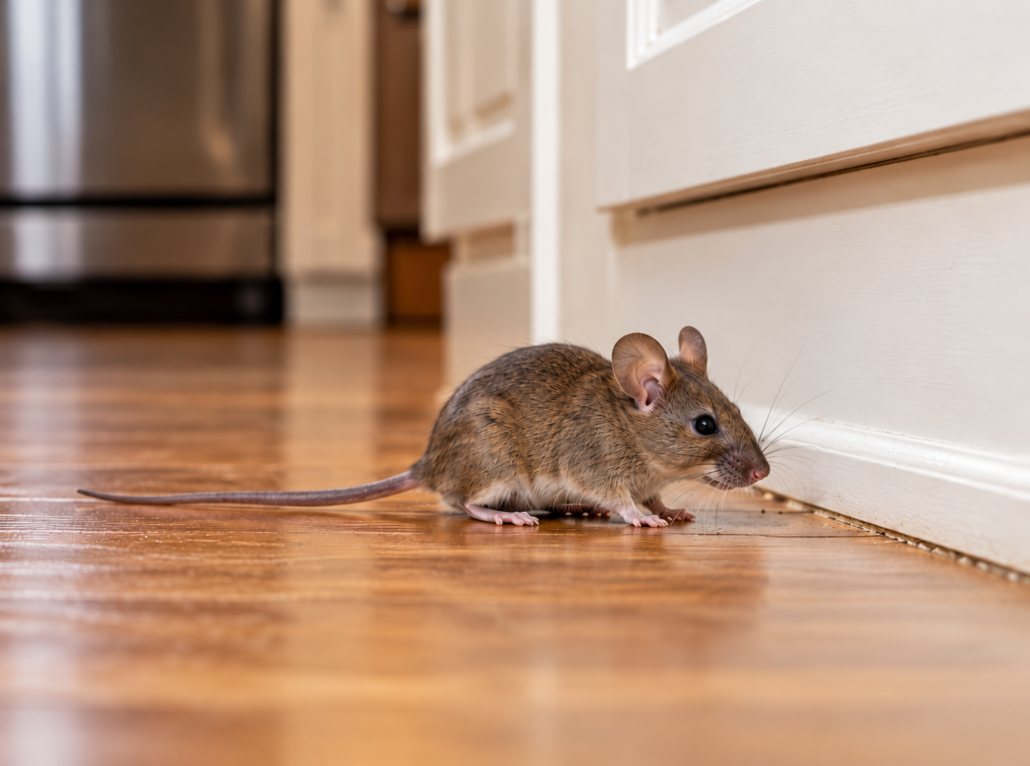
Mice vs. Rats: How to Tell What’s Invading Your Home
You hear scratching after dark. A bag of snacks has a hole in the corner. Then you spot something small darting along the wall.
You’re fairly sure you have an unwanted visitor. But is it a mouse or a rat?
The answer matters because identifying the pest helps determine where to inspect, how to address the activity, and what needs to happen to keep rodents from returning.
You don’t have to catch one in the act to find useful clues. Here’s what to look for and why the full picture matters more than any single sign.
Start With Size and Shape
If you get a clear look, adult mice and rats have noticeable differences.
House mice have small, slender bodies, pointed noses, and ears that look relatively large compared with their heads. Adult rats are larger and more heavily built.
However, a young rat can be mistaken for a mouse. Its proportions can offer clues: young rats tend to have comparatively large feet and heads.
A quick glimpse across the garage may not be enough for a confident identification. If you can safely take a photo without approaching or cornering the animal, it may help a professional determine what you’re seeing.
Notice Droppings Without Disturbing Them
Droppings are often easier to find than the rodents themselves.
Mouse droppings are generally small and narrow, while rat droppings are larger. Their shape can vary by species, so size alone should not be your only identification method.
Pay attention to where you find them: inside cabinets, along walls, near pet food, or around stored belongings. That location can help guide an inspection.
Avoid touching droppings or breaking them apart to examine them. Take a photo from a safe distance instead.
Also, don’t assume one small group means only one rodent is present. An inspection may uncover additional activity in less visible areas.
Follow the Damage
Chewed food packaging, damaged storage containers, and disturbed belongings can all point to rodent activity.
Look around pantry shelves, beneath sinks, behind appliances, and along the edges of storage areas. Shredded paper or other gathered material may indicate nesting nearby.
Both mice and rats can gnaw, so a damaged cereal box won’t settle the identification question. The size of the damage, nearby signs, and possible entry routes need to be considered together.
If you notice damaged electrical wiring, avoid handling it and contact a qualified electrician. Pest control and electrical repairs address different parts of that problem.
Consider Where Activity Is Happening
The location of the evidence can help narrow the search, but it doesn’t provide a definitive answer.
Mice can occupy small concealed spaces throughout a home. Rat behavior varies by species: Norway rats often use ground-level areas and burrows, while roof rats are skilled climbers that may occupy elevated spaces.
Finding activity upstairs doesn’t automatically mean mice, just as basement activity doesn’t automatically mean rats.
Make a note of each location where you notice evidence. Sharing that information helps a pest professional build a more complete picture rather than focusing on only the first place you heard something.
Don’t Rely on Sounds Alone
Scratching in a wall can sound surprisingly loud, especially when the house is quiet.
It’s tempting to decide that a louder noise must mean a larger animal. But building materials can carry sound, and other pests may also be responsible.
Instead, record when and where the noise happens. Does it return near the same cabinet? Is it above the ceiling or beneath the floor? Have you noticed droppings or damage nearby?
Those observations are useful. Opening a wall or entering a difficult attic space to investigate on your own generally isn’t the best next step.
Handle Cleanup Carefully
Finding droppings often brings an immediate urge to grab the vacuum. Resist that urge.
CDC guidance advises against sweeping or vacuuming rodent waste before disinfecting it because those actions can put contaminated particles into the air.
For routine cleanup, follow CDC instructions, including ventilation, gloves, thoroughly wetting waste with an appropriate disinfectant, and allowing the recommended contact time before removal. Extensive infestations or contaminated ventilation systems require additional precautions.
Keep children and pets away from affected areas while you arrange cleanup and treatment.
Address What Brought Them Inside
Identifying the rodent is the beginning. Lasting control also means understanding access, food, shelter, and ongoing activity.
Store food securely, address spills, reduce clutter, and have potential entry points assessed. Discuss exclusion and treatment together so the work follows an appropriate plan for your home.
Lincoln Pest Solutions can help identify the signs, explain what’s happening, and recommend next steps. Whether you’ve found a chewed package or heard something in the wall, getting answers early helps you move forward with a clear plan.
Lincoln Pest and Property Solutions is a locally owned and operated business serving Rhode Island & Southeastern Massachusetts. As one of the leading pest control companies in RI, our mission for over 35 years has been simple: Provide innovative and effective pest control solutions for your home or business, while maintaining a safe environment. We use the latest in eco-friendly technology to keep your home or place of business safe and pest free.


